Tips on Growing & Caring for Orchid Plants
Growing an Orchid tin can be a worthwhile or disappointing experience. It all hangs on whether you tin can go the conditions right. If you find its flowers quite luring, so yous'll perhaps be passionate enough to acquire all it takes to grow and treat the houseplant.
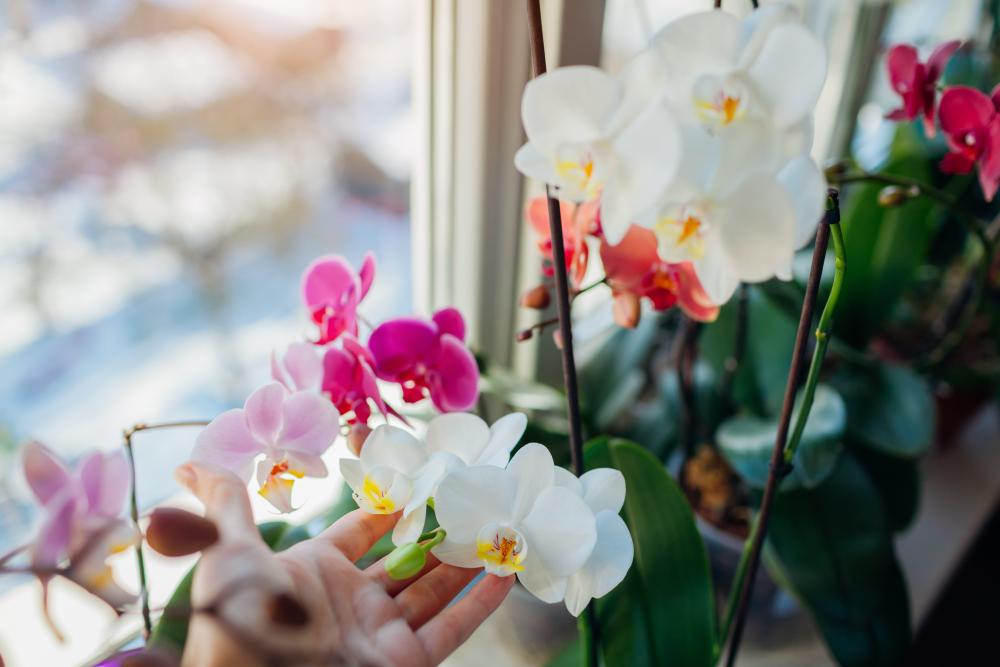
In this guide, we've summed upwardly the nuts of maintaining and reproducing an Orchid.
More Well-nigh Orchid Plants
If information technology's your first time growing an Orchid, nosotros can relate to how like shooting fish in a barrel it is to be intimidated by its stellar yet fragile appearance. Orchids come from the Orchidaceae family. The family unit is the second largest of all flowering plants. Almost are epiphytes, while there are other Orchids with terrestrial attributes.
Non all of them are difficult to grow and maintain. Some have hardy traits and could stand up tall all year round. Over 1300 species tin can be dominantly traced in the northern office of Republic of india. Most Orchids are perennial herbs with blooms that could last 8 weeks or slightly more.
If you know the exact genus, growing your Orchid blazon won't exist a nerve-wracking thing to do. While Orchids behave like tropical plants, they dread excess moisture and normal potting soil.
Lack of enough humidity and intense exposure to the sun are besides other ii mutual mistakes that beginners frequently make when growing this plant indoors. If y'all tin mimic this establish's native habitat, then y'all won't experience whatever flaws with information technology.
How to Abound Orchids Indoors
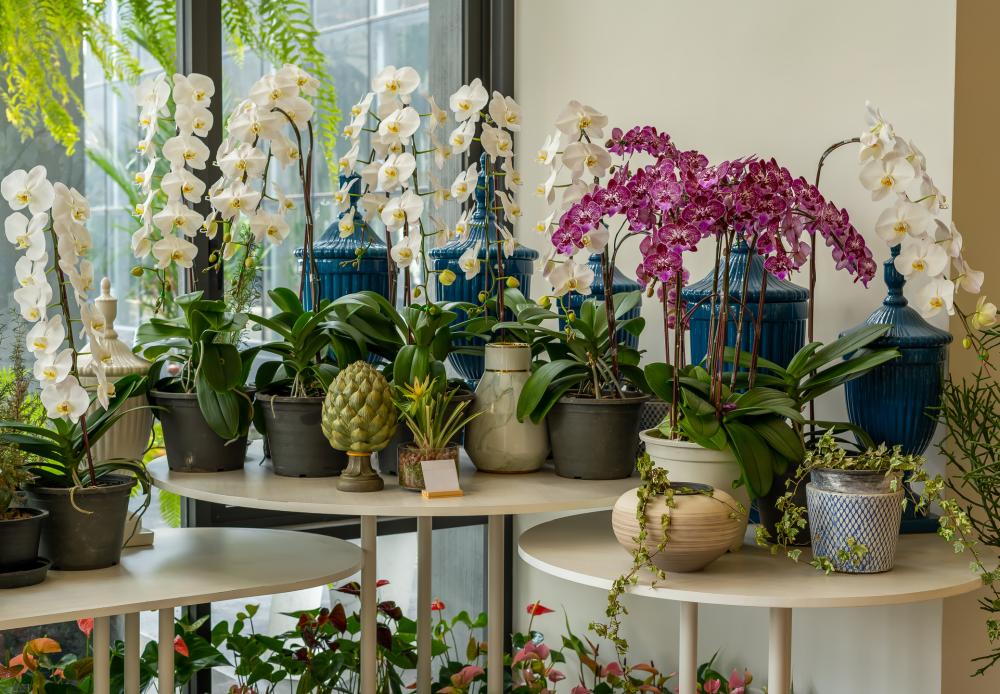
Growing Orchids indoors provides the perfect surroundings to tweak the suitable conditions. Hither are a few pointers to piece of work with when looking to grow Orchids in an indoor setting:
- Pick a spot where the growing medium will receive bright, indirect lite for nigh 5 hours every day.
- You can choose to purchase the tropical houseplant from a nursery or grow it from scratch using some propagation tips that nosotros'll discuss later in this guide.
- Since the stems of this plant are somewhat feeble, you'll desire to detect ways to give it back up while growing.
- Use a container that fits the roots without leaving as well much space that would cause the plant to bend down.
- When sourcing cuttings from the mother plant, aim for those that seem not to have any underlying problems.
- Tweak the indoor humidity levels to give the houseplant a tropical environment that it's accustomed to.
- You besides need to grow the constitute in a warm environment throughout the seasons.
- Brand certain to give the constitute some shade, to protect the foliage from any intense heat.
How to Care for Orchids Throughout the Seasons
Tips on How to Encourage Blooming
Orchids are an all-time favorite for many growers because of their colorful and opulent flowers. It's maybe more reason why you lot take an interest in learning how to grow this cheerful bloomer. The plant, however, needs tailored conditions to produce flowers during the blooming period.
To encourage blooming, you want to get the light conditions correct. However, since the stems are somewhat feeble, you might demand to hammer a pale about right next to the plant, to give the stems extra support and go on them from angle downwards. Orchids bought from nurseries or gardening stores are most oft already staked, particularly if they have bloom buds on them.
Y'all also want to filter any straight light since the intense heat from the dominicus could crusade the blooms to lose their vigor. If y'all desire to heighten the chances of blooming, use fertilizer lights. We'll await at the feeding options later in this guide. Afterward owning this cultivated bloomer, y'all'll soon realize that the flowers aren't meant to terminal forever.
Trim the spikes on spent flowers to promote the production of flowers during the blooming phase. Leave the former spikes intact considering the flowers will sometimes emerge from them. If the spikes begin to turn yellow or brown, the chances of reblooming would be pretty slim, and then information technology'south best to just prune them.
When pruning the spikes, make sure to apply a sterilized pair of scissors, to avoid infecting your Orchid plant with hard-to-care for infections.
Soil & Repotting
The growing medium needs to match the growing weather condition that the Orchid houseplant requires to sprout and produce vibrant blooms. While this plant is tropical in nature and is accustomed to high humidity, the roots must not sit in clammy soil for as well long.
When preparing the potting soil, you desire to keep the drainage needs in mind. If the soil retains also much moisture for a lengthened period, your Orchid plant might offset to suffer from rotting and a couple of dreadful fungal infections. In fact, potting soil isn't recommended.
Instead, stick to orchid mix and y'all'll see your houseplant burgeon generously. Abound it inside an orchid potting mix since it provides proper airflow, easy drainage, and root ventilation. It'southward best to transplant (phalaenopsis) orchids every 12-18 months.
Repotting is usually the best time to supersede the erstwhile potting soil with 1 that has a potent food composition. The potting mix construction dictates a lot about how often you'll need to water your Orchid houseplant. Orchids need firm anchoring subsequently potting them till the roots mature up.
You likewise want to utilize a container, with plenty drainage holes that let out whatsoever excess moisture. Orchids grow in slightly acidic conditions. Where it'southward native to, the tropical houseplant grows under trees where the ground is filled with organic but nutrient-scarce matter.
To mimic these conditions, information technology'southward best to place heavy reliance on the Orchid mix instead of normal potting soil. If y'all don't want to use a commercial mix, you tin try going the DIY route. Some of the materials you can use to set up the mix include charcoal, bark, peat moss, coconut coir, gravel, and sphagnum moss.
Pick whatever two materials to prepare the potting mixture. For efficient air circulation, lay the materials lightly within the growing pot, especially around the roots' area. Near gardening stores sell dirt pots specifically made for orchid plants with slits on the sides instead of the base of operations part.
The splits aid provide enough air circulation to the roots. Other gardeners like to grow their Orchids inside transparent plastic containers to continue rails of the development of roots.
Temperature Weather
Existence tropical in nature, that tells a lot near the kind of temperature levels Orchids similar to thrive in. Nigh Orchids will require consistent warm temperatures to grow optimally and produce flowers during the blooming season. They can accommodate temperature fluctuations of well-nigh ten degrees Fahrenheit between day and nighttime.
Orchids growing indoors will typically do well under temperatures ranging from 65 to 75 degrees Fahrenheit during the day. The temperature range is suitable for intermediate growers such as Cattleya, Miltonia, and the Dendrobium species. When it's nighttime, fifty-65 degrees Fahrenheit will work merely fine.
Y'all might, nevertheless, need to conform the indoor temperatures, depending on the Orchid type you lot're looking to grow. Some will need a significantly warm environment, while others sprout better under mid-range temperatures. It's also essential to note that temperatures going beyond 90 degrees Fahrenheit can damage the blooms.
Species such as Bidium, Odontoglossu, or Miltoniopsis are often dubbed absurd growers and prefer pretty average temperatures. The day/night differential helps promote healthier growth, compared to maintaining constant temperature levels.
Humidity Requirements
Near all tropical houseplants similar to abound in an surround with high humidity. The suitable humidity rate for most Orchid species lies anywhere between 40-70 pct. Make sure to employ a growing pot with drainage holes, place it on top of a tray with gravel, so add water on the tray to constantly give the plant the correct prepare of humidity levels it needs.
Light Conditions
Avoid exposing the growing medium to direct lite at all costs. While Orchids need brilliant light throughout the growing season, you need to provide the growing medium with some shade to keep the leaves and blooms from getting scorched. If you know the exact Orchid blazon you're growing, it would be much easier to tweak the preferred lite atmospheric condition.
Placing the growing medium near an e-facing window where it gets a few hours of the morning time lord's day would assist the tropical charmer bloom in quite an imposing manner. On the other hand, placing the container in a dark location causes the institute to experience leggy growth and might fail to bloom. If y'all want to use fluorescent or LED grow lights, make certain the Orchids plants are at to the lowest degree 8′ inches away.
To know whether the lite conditions are optimal, go on checking the foliage color as often as possible. If they look bright and dark-green, then there won't be a demand to panic. However, night-greenish foliage means the plant is not getting plenty sunlight. Yellow or ruddy leaves, on the other hand, are a sign that your Orchid houseplant is getting scorched by intense rut from the dominicus.
Varieties like Cattleya, Cymbidium, Ascocenda, Phragmipedium, Brassia, Vanda, and Dendrobium prefer access to brighter light than other Orchid types.
When & How to Water Your Orchids
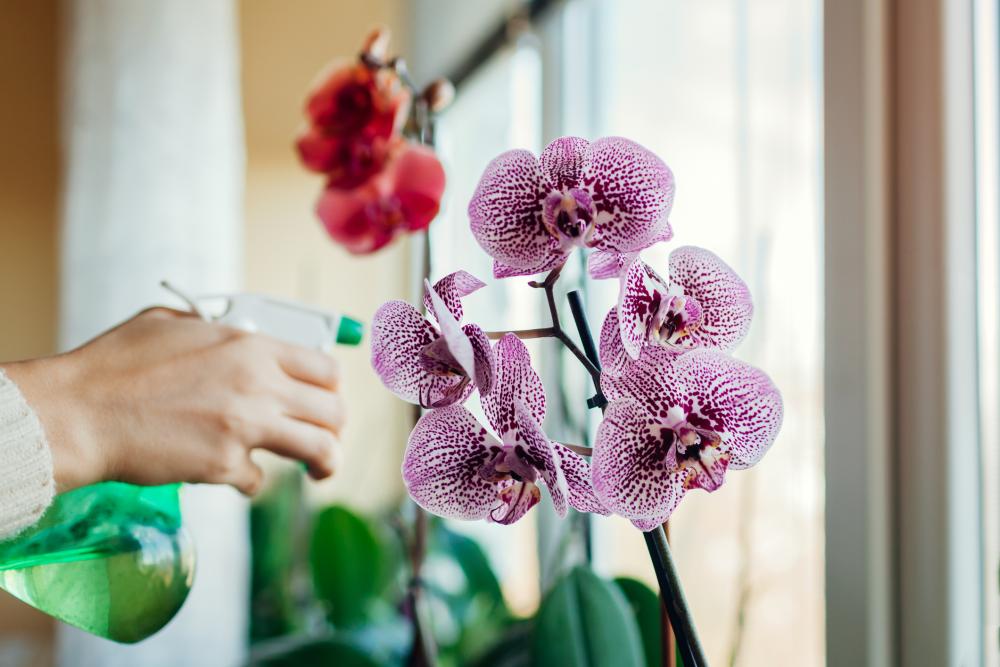
If the potting mix tin can handle drainage quite effectively, you won't find trouble predicting the houseplant'south watering patterns. Watering this tropical beauty in one case a week would be enough to make it abound splendidly and produce showy flowers. The roots must not sit down in water for likewise long.
Rotting and a agglomeration of fungal infections might crop upward if the plant is exposed to excess moisture for a diffuse period. During wintertime, lightly mist the found just to keep it hydrated and reduce the watering intervals to once per calendar month. You need to look for the potting mix to dry up entirely before watering your Orchid houseplant again.
Almost Orchids would survive drought over damp conditions. Overall, the watering intervals will depend on the temperature, growing medium, type of container, and plant age.
Is Feeding Necessary?
While feeding isn't a must, your Orchids will produce more flowers when additional with fertilizer during the blooming season. Feed them lightly during jump and springtime one time every calendar week. To avoid burning the foliage, use soluble fertilizer and dilute it at one-half its strength. Use a counterbalanced fertilizer preferably in the ratio of 20-20-20. Avoid spraying the leaves when fertilizing and make sure to drain them if the solution is in excess.
Too much fertilizer could burn the leaves and blossom of your Orchid houseplant. During the days designated for feeding, you want to avoid watering your Orchids. Alternatively, you can endeavour out natural remedies like Epsom common salt, and crushed craven shells. Craven shells hold a high composition of calcium and potassium. Calcium helps with the strengthening of the cell walls, while potassium boots upward the entire chlorophyll production process.
Preparation & Maintenance
At that place won't be much training or maintenance to do since nearly Orchid types aren't fussy. Pruning isn't necessary as the institute doesn't possess any invasive traits. Your Orchids just demand a balance of light, water, air circulation, and the right potting mix. Get rid of any wilted leaves and flowers one time the blooming menstruum is over. Make certain to go out the spikes intact since blooms tend to sprout from the old ones most often.
How to Propagate Orchids
Propagating Orchids isn't a crushing task. There are two feasible ways to get virtually it. Y'all can choose to propagate Orchid houseplants using stem cuttings or offshoots that autumn off from the mother plant and sprout on the edges of the growing medium. I tend to find stalk cuttings much easier since the steps aren't besides complicated for a beginner.
To achieve higher success when propagating, choose cuttings that expect healthy and don't take signs of fungal or bacterial infections. They need to exist thick and at least 4′ inches long. Use a sterilized pair of scissors to dissect the stem cut correct above the node. Each cutting needs to accept at least 2 sets of leaf nodes.
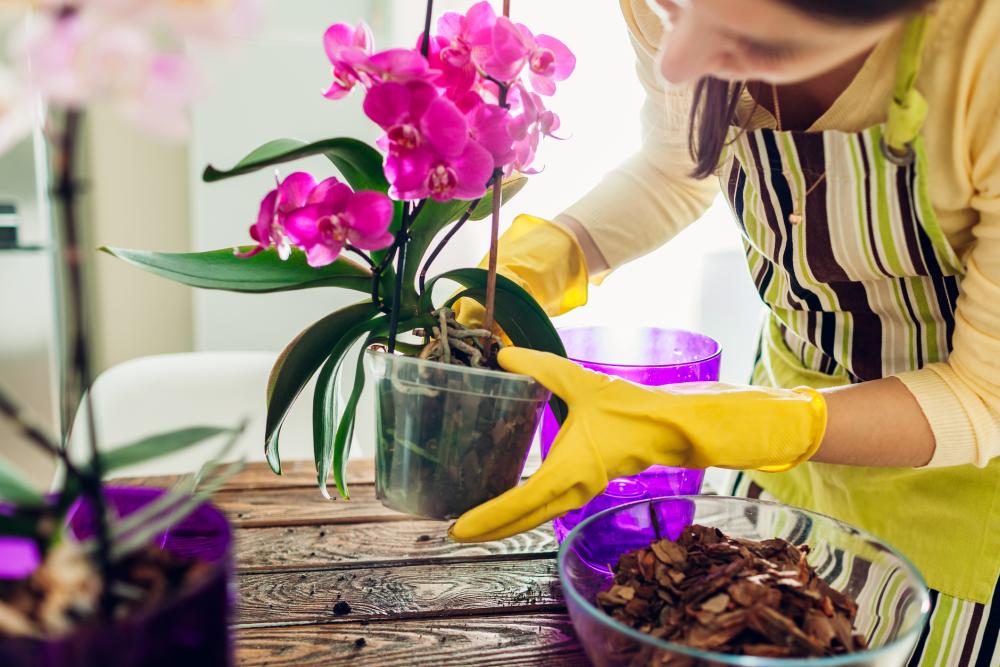
Utilise an antifungal remedy like charcoal or cinnamon to care for the wounds and keep the cuttings from communicable diseases. Use a potting mixture that'due south ideal for Orchids to amend the development of roots. Plant the cuttings horizontally in a wet medium like sphagnum moss. Make reference to the tips under the soil requirements section.
It's worth noting that sourcing cuttings from epiphytic Orchids tend to have higher chances of success. Those with terrestrial traits can also exist used for propagation, but the method will exist slightly different. You can choose to use rooting powder to speed upwardly the formation of roots.
Mutual Orchid Flower Problems
Farthermost variations in the growing weather condition would definitely cause your Orchids to experience stunted growth or look offbeat. If grown under optimal conditions, you won't need to worry much about whatever adverse effects. However, this houseplant often gets infested past pests similar scale insects, mealybugs, and aphids.
During the growing cycle, Orchids might struggle with mealybugs, specially if the potting mixture doesn't permit out excess moisture and the nitrogen levels are high. If y'all spot honeydew deposits on the underside of the leaves, your Orchids are most likely infested by these bugs.
Source: https://www.diys.com/growing-caring-for-orchid-plants/
0 Response to "Tips on Growing & Caring for Orchid Plants"
Post a Comment