What Can You Give a Baby if They Dont Take a Pacifier
Pacifiers – are they healthy, unhealthy, or just completely unnecessary? Parents can't seem to come up to an agreement but the truth remains that they can be super helpful, especially when it comes to soothing fussy babies.
But when your baby won't take pacifier, this doesn't mean that your baby's binky ship has sailed!
Although there are babies who never warm upwards to pacifiers, there are numerous tricks y'all can try earlier waving the white flag.
The key lies in offer the soother or dummy (or whatever y'all phone call it!) to your infant when he'due south in a skilful mood or correct after a feeding.
When he's fussy and crying, you've already lost the battle before yous've fifty-fifty begun!
If that doesn't work, effort dipping the silicone or latex nipples into a small amount of babe formula or breast milk and giving it to your baby.
To motivate your babe to actually suck on the nipple, yous tin can try gently shaking or borer the dummy while it'south in your baby's mouth.
Virtually importantly, remember to be patient and take it piece of cake. Some babies but don't intendance for sucking on dummies and y'all should never strength your baby to use one.
If this happens, it's non the end of the world every bit at that place are many alternatives to pacifiers you can effort.
And, if you're nursing, wait until you and your baby have gotten the hang of it (usually almost a month) earlier you innovate a pacifier.
What To Do When Baby Won't Take Pacifier
Here are 6 tricks y'all can endeavour when your babe won't take pacifier.
1. Endeavour different pacifiers
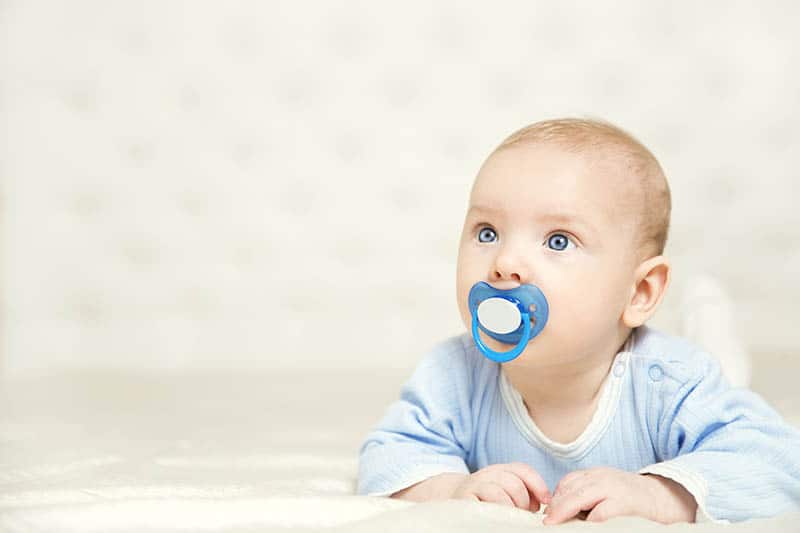
No thing what, there is ever more than than one kind of paci, so when your baby rejects one, just give another kind a try.
The first matter to keep in mind is the size of the pacifier, and making sure that the size on the characterization matches your little one's age.
About pacifiers or dummies are available in sizes pocket-sized (suitable for a 6-month old or younger baby), medium (from half-dozen to 18 months of historic period), and large (over 18 months of age).
A paci that'due south too large tin exist dangerous for your piffling one, not to mention that it's probable your baby will reject it.
So, you should too consider the blazon of pacifier. The Soothie pacifier past Philips Avent, for instance, is designed to be 1-piece with no additional parts that could break off.
In that location are also traditional three-slice models, as well as models that come with a stuffed animal the baby can play with.
You should also take note of the fabric. Most infant pacifiers you can purchase online or at the store are either made from latex or silicone.
While latex is not as rigid every bit silicone and has more flexibility, it's non very durable. Y'all can't wash it in the dishwasher, either.
More than chiefly, there are babies with a latex allergy, so continue this in heed if your little one seems to hate his latex binky. On the other hand, your babe might love the softer texture of the latex textile – practice give it a try!
As for silicone, you can thoroughly clean it in a bottle sterilizer and in the dishwasher. It's durable and stays odor-gratuitous which is another bonus.
If your munchkin doesn't similar one type of fabric, try and switch it up to see whether he prefers a different kind.
Unfortunately, there is no best pacifier for baby who won't have one – it comes down to trying different options and seeing which one works all-time.
Once you figure out which is the best pacifier for your baby, I recommend purchasing several of the same models in instance one gets lost.
2. Find the right time
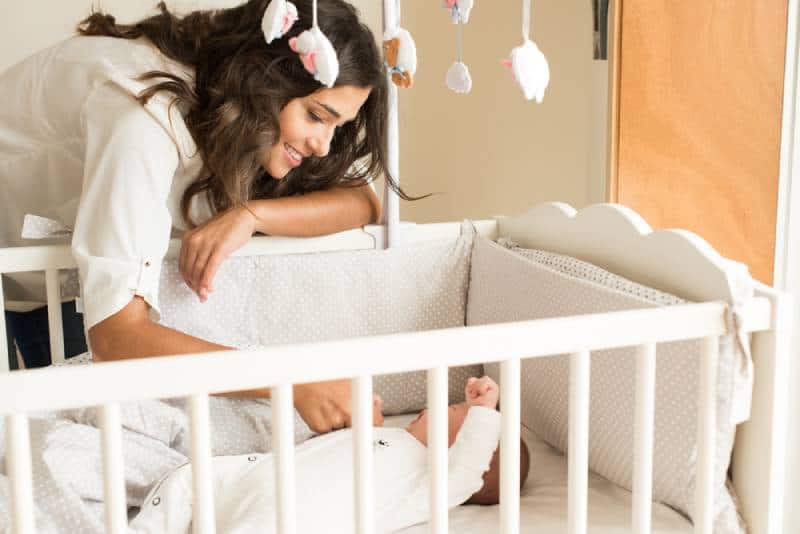
The aforementioned rules that apply to introducing canteen feedings to breastfed babies apply here besides.
When a baby refuses the canteen, it'southward often because the canteen was offered at the incorrect time, when the baby was already hungry, tired, or cranky, and in no mood to endeavour anything new.
That's why yous should brand sure to offering a paci when the babe is fed and calm.
First, gently place the paci to your niggling one's cheek – your baby will hopefully plow his head and you can place the pacifier into your baby's rima oris.
three. Add babe formula or breast milk
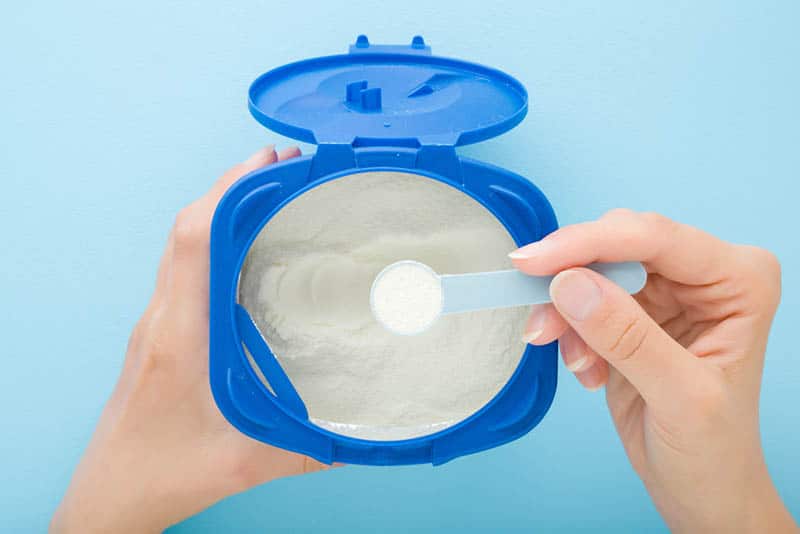
Baby won't have pacifier? You can try making the process a fiddling easier with your infant'southward favorite food.
At this stage, information technology's either breast milk (if yous are breastfeeding) or baby formula. Dip the silicone or latex nipple into a small amount of expressed breast milk or formula and give information technology to your babe.
Hopefully, this will aid your baby take their soother and finally stop smacking his lips or sucking on his mitt.
You can also try warming the nipple in a small amount of warm h2o.
4. Try borer and shaking

The whole signal of a pacifier is to offering non-nutritive sucking.
And so, to encourage your baby to actually suck on the latex or silicone nipple, yous tin can try gently tapping the paci once it'due south in your baby's mouth.
Alternatively, yous tin endeavour to lightly shake it from side to side.
5. Offer paci at the end of a feeding session

An excellent technique to try when the baby won't take pacifier is to offer information technology at the end of a feeding session when your little one is feeling sated and sleepy.
If y'all are breastfeeding, for instance, merely supplant your boob with a paci. Most new moms find this strategy to exist very effective as the baby is content and well-fed, and less likely to protest.
6. Go on trying
Ane of the biggest mistakes parents brand with their new baby is to assume that when their baby won't have pacifier later just ane attempt, he never will.
The key is to make the entire procedure fun and be patient.
If you've been trying to offer a pacifier to your baby for a few days with no success, and so take a break and come back to it in a calendar week or so.
Just remember that some babies never warm upward to information technology, then don't strength it if it doesn't seem to be working.
The Upsides And Downsides Of Pacifier Use
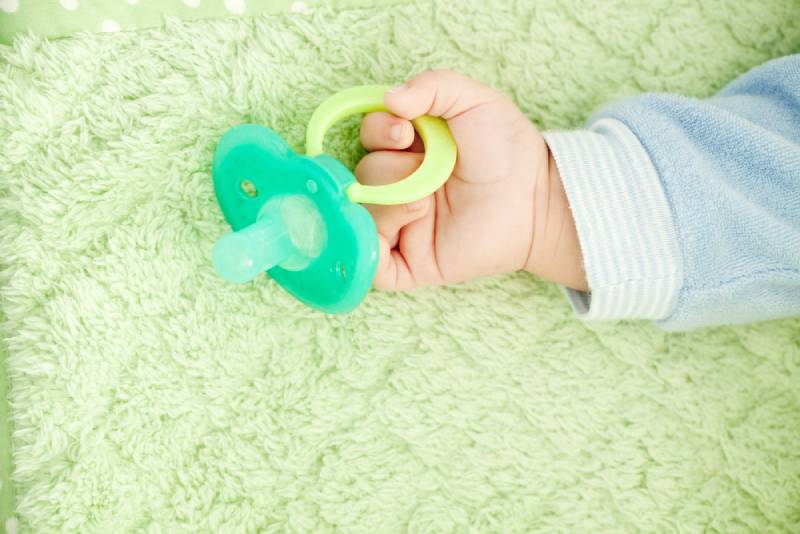
A pacifier belongs to the category of baby things that's considered an absolute essential – although there are parents who are staunchly confronting its use.
Nevertheless, the pros of pacifier use brand for a powerful incentive to innovate them to your babe.
But when should you even consider offering a soother or a binky to your infant?
According to the American University of Pediatrics (AAP), if you lot are planning to breastfeed your baby, then you should wait until breastfeeding is successfully established before giving a binky to your infant.
This usually happens effectually the time your baby turns i month old.
If you're nevertheless unsure whether to requite a binky to your infant or not, hither are some upsides and downsides to consider.
Upsides
Arguably the biggest reward of using a pacifier is the fact that researchers such equally R.Y. Moon et al (2012) have shown that it decreases the risk of sudden babe death syndrome (SIDS), especially when the infant is sleeping in an surround that puts him at a high adventure of SIDS.
Furthermore, it allows the parents to soothe their baby anyplace, someday, which is specially useful when taking a newborn baby on a flight, for example.
And while condolement nursing has the same soothing effects, binkies give mom the opportunity to exist away from their baby, without worrying that the person caring for their picayune one volition not be able to soothe him.
The utilize of a dummy also encourages self-soothing in infants during the first year and makes for an excellent teething remedy .
For case, many parents notice that dipping the silicone nipple in some water and then placing it in the freezer to cool really helps with the pain babies feel when they're teething and feeling cranky.
If your baby is suffering from colic, then the non-nutritive sucking provided past a pacifier can assistance him calm downwards.
With bottle-fed babies, in that location is a risk that parents will think their babe is hungry when in fact, he just has an urge to suck.
Every bit a result, canteen-fed babies might be given besides much to eat because they can't conform the flow of milk from a bottle. In this example, a pacifier can prevent bottle-fed babies from overfeeding.
Downsides
Parents who are against dummies of any kind claim that they can cause nipple confusion in breastfed babies, leading to premature weaning.
It's of import to say that not all babies develop nipple confusion and easily switch between breastfeeding and sucking on a pacifier or a bottle nipple simply if you lot want to be on the safe side, just wait until your baby gets the hang of breastfeeding earlier introducing a dummy.
Another con is the fact that babies tin get very accustomed to falling asleep while sucking on a dummy.
If it falls out during sleep, your baby volition probably cry, causing you to get up, observe the dummy, and give it dorsum to them.
When this happens multiple times in one dark, it tin make your dreams of having your baby sleep through the night seem impossible – yet, in that location are ways of tackling this addiction too.
Simply similar with all habits that are formed in the first 12 months of a baby's life, a babe can get very attached to their binky and find it very hard to give it up.
Weaning from a pacifier can be equally large of a procedure as weaning a baby from nursing, especially if your child continues using it well into their toddler years.
In addition, in that location'southward a higher run a risk of ear infections.
At that place'southward also a chance that parents tin start overly relying on a dummy whenever their baby cries, causing them to miss out on symptoms that indicate something is wrong.
But, one of the biggest reasons why many parents would like to steer clear of pacifiers is their potential negative impact on the babe's teeth.
Notwithstanding, this usually happens if a child continues sucking on a thumb or a dummy past the historic period of four or 5, which is quite rare – most babies are weaned past that point.
When To Wean Your Baby From The Pacifier

As I already mentioned, weaning your baby from the pacifier can sometimes be challenging. Even so, it is important that you practise it before a certain point to avoid dental problems.
While there is no specific age recommendation for weaning, near experts agree that a kid should be weaned by the age of three.
On the other hand, South. Sexton et al (2009) write that the AAP and the American Academy of Family Physicians recommend weaning to take place between six and 12 months of age.
Whether your kid is weaned by his beginning birthday or past the historic period of 3 is up to you. However, weaning is easiest before 12 months as babies are more flexible in this regard than toddlers, equally they can develop an emotional connectedness with their dummy and refuse to give information technology up, no affair how difficult you try.
If your child continues using a dummy past his offset birthday, don't worry – there are numerous strategies to aid y'all out, such equally limiting its use only to help him fall asleep.
With time, you tin supersede the pacifier with other soothing bedtime routines.
This process tin can take fourth dimension, depending on the personality of the kid, so try not to compare the experiences of your kiddo to others.
To Wrap Upwardly
Although there are enough of parents who are against using dummies or soothers of any kind, yous can't deny that they do help when it comes to calming babies downwards, peculiarly in stressful situations.
And when you're getting set up to fly for the offset time with your baby, who could blame you for wanting a piffling help from a latex or silicone dummy?
Even more significant is the research showing that dummies can reduce the take chances of SIDS, making them very beneficial for babies.
Only if you are nursing, remember to concur off on introducing a dummy to your precious package of joy before the two of you lot have gotten the hang of nursing.
Should yous notice that your baby simply doesn't take to a dummy, don't push it. While it might be sometimes more difficult to soothe your kid, at to the lowest degree you won't have to worry nigh weaning a couple of years downwards the line!
References:
• American Academy of Pediatrics. (2012, December xiii). "Pacifiers: Satisfying Your Baby's Needs" [Blog postal service]. Retrieved from the Healthy Children website.
• Moon, R. Y., Tanabe, K. O., Yang, D. C., Immature, H. A., Hauck, F. R. (2012). "Pacifier use and SIDS: testify for a consistently reduced risk." Maternal and Child Wellness Journal, 16(three), 609-614.
• Sexton, S., Natale, R. (2009). "Risks and benefits of pacifiers." American Family Physician, 79(8), 681-685.
Like this post? Please share or pin it for later. Yous tin also stay in the loop and follow u.s. on Facebook, Instagram or Pinterest.
This post contains affiliate links. Please run across our full disclosure for more info.
Source: https://findyourmomtribe.com/baby-wont-take-pacifier/
0 Response to "What Can You Give a Baby if They Dont Take a Pacifier"
Post a Comment