Doctors Have Said I Will Never Ride a Horse Again Due to Degenerative Disc Disease
Degenerative Disc Disease
Not what you're looking for?
What is degenerative disc disease?
Nearly everyone's spinal discs testify signs of wear as they historic period. Not everyone, all the same, will have degenerative disc illness. Not actually a disease, this is a condition in which a damaged disc causes pain. A wide range of symptoms and severity is associated with this condition.
Spinal Discs
The discs are like shock absorbers between the basic of the spine and are designed to assistance the dorsum stay flexible while resisting terrific forces in many unlike planes of motility. Each disc has two parts:
- A business firm, tough outer layer, the anulus fibrosus. The outer portion of this layer contains nerves. If the disc tears in this surface area, it can become quite painful.
- A soft, jellylike core, the nucleus pulposus. This part of the disc contains proteins that can crusade the tissues they bear on to become swollen and tender. If these proteins leak out to the nerves of the outer layer of the disc, they can cause a groovy bargain of pain.
Different other tissues of the body, the disc has very depression blood supply. Once a disc is injured, information technology cannot repair itself, and a spiral of degeneration tin can set in with 3 stages that appear to occur over 20 to 30 years:
- Acute hurting makes normal movement of the back difficult
- The bone where the injury occurred becomes relatively unstable. Over a long menstruum of time, the patient volition take back pain that comes and goes.
- The body restabilizes the injured segment of the back. The patient experiences fewer bouts of back pain.
What causes degenerative disc disease?
Several factors can crusade discs to degenerate, including age. Specific factors include:
- The drying out of the disc. When we are built-in, the disc is nearly lxxx percent water. As nosotros age, the disc dries out and doesn't absorb shocks besides.
- Daily activities and sports, which cause tears in the outer core of the disc. By age 60, most people take some degree of disc degeneration. Non everyone at that age has back hurting, however.
- Injuries, which can cause swelling, soreness and instability. This can result in depression back pain.
What are the symptoms of degenerative disc disease?
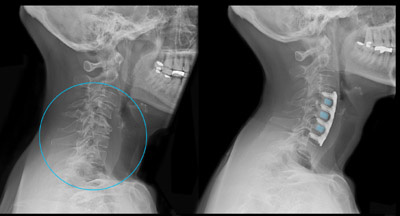
The typical person with degenerative disc affliction is active, otherwise good for you and in his or her 30s or 40s.
Common symptoms of this condition include:
- Hurting that is worse when sitting. While seated, the discs of the lower dorsum have three times more than load on them than when standing.
- Pain that gets worse when bending, lifting or twisting.
- Feeling better while walking or even running than while sitting or standing for long periods of time.
- Feeling amend changing positions often or lying downward.
- Periods of severe pain that come and get. These last from a few days to a few months earlier getting meliorate. They can range from nagging hurting to disabling pain. Hurting tin affect the depression back, buttocks and thighs or the neck, depending on where the afflicted disc is, radiating to the arms and hands.
- Numbness and tingling in the extremities.
- Weakness in the leg muscles or foot drop, a possible sign of damage to the nervus root.
How is degenerative disc disease diagnosed?
A diagnosis is based on a medical history and a physical examination, every bit well equally the symptoms and the circumstances where the pain started. Magnetic resonance imaging can testify harm to discs, just it lone cannot confirm degenerative disc disease.
How is degenerative disc illness treated?
Treatment options include:
- Bogus disc replacement
- Surgical intervention
- Nonoperative treatment of symptoms, including acupuncture, back braces and hurting direction
Central points
- Degenerative disc disease isn't actually a illness, but rather a condition in which a damaged disc causes pain. This pain can range from nagging to disabling.
- The status can be caused past the drying out of the disc over time, daily activities, sports and injuries.
- Treatment options include disc replacement, other surgical interventions, and nonsurgical options such as acupuncture, back graces and hurting management.
Side by side steps
Tips to assistance y'all get the most from a visit to your healthcare provider:
- Know the reason for your visit and what you lot want to happen.
- Before your visit, write downwardly questions you lot want answered.
- Bring someone with you to aid you ask questions and remember what your provider tells yous.
- At the visit, write down the name of a new diagnosis, and whatever new medicines, treatments, or tests. Besides write down any new instructions your provider gives you.
- Know why a new medicine or treatment is prescribed, and how it volition help you. Also know what the side effects are.
- Ask if your condition can be treated in other ways.
- Know why a test or procedure is recommended and what the results could hateful.
- Know what to expect if you lot do not take the medicine or take the exam or procedure.
- If y'all have a follow-up date, write down the appointment, time, and purpose for that visit.
- Know how you can contact your provider if y'all take questions.
© 2000-2021 The StayWell Company, LLC. All rights reserved. This data is not intended as a substitute for professional medical care. Always follow your healthcare professional's instructions.
Non what you're looking for?
Source: https://www.cedars-sinai.org/health-library/diseases-and-conditions/d/degenerative-disc-disease.html
0 Response to "Doctors Have Said I Will Never Ride a Horse Again Due to Degenerative Disc Disease"
Post a Comment